
January 17, 2025
Reflective Safety Signs: Where and When Should You Use Them?
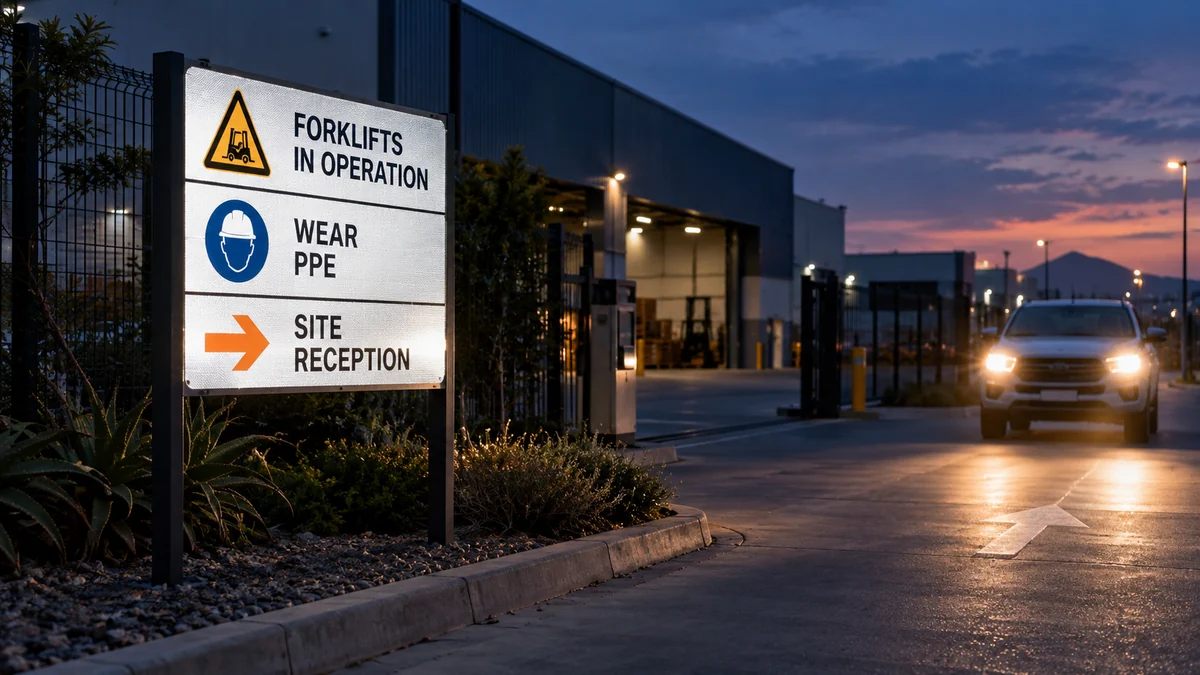
Reflective safety signs are designed to become more noticeable when a direct light source shines towards them. At night or in a dim area, headlights, a torch or another near-source light can return from the reflective surface towards the viewer. That makes reflective signage useful where an important message must remain easier to locate in changing light.
Reflectivity does not make a sign self-illuminating, and it does not replace appropriate site lighting. It is one part of a wider safety and wayfinding plan.
How reflective signage works in practice
A reflective face redirects a portion of incoming light back towards its source. The effect is strongest when the viewer is close to that light source—for example, a driver looking past the vehicle’s headlights. Without direct illumination, the sign may look similar to an ordinary printed panel.
Visibility still depends on the sign’s design. Strong contrast, clear symbols, concise wording and an appropriate size remain essential. A reflective finish cannot compensate for tiny lettering, low contrast or a sign hidden behind vegetation.
Ellesi’s Custom Reflective Signs are printed in full colour on rigid 0.6 mm Chromadeck. The live product includes standard sizes and a custom-size route, with the reflective finish included in the configured product.
Where reflective safety signs can help
Vehicle entrances and parking areas
Parking rules, visitor bays, loading zones, gate instructions and speed reminders may need to be seen before sunrise, after sunset or during poor weather. Reflective parking signs are particularly useful when the intended viewer approaches in a vehicle. Place the sign where headlights can reach it without glare or obstructions.
Factories, warehouses and logistics sites
Shift work and enclosed loading areas create mixed lighting conditions. Reflective signs can support access control, PPE reminders, restricted-area notices and delivery directions. They should form part of a consistent site-signage system, alongside suitable lighting, markings and induction procedures.
Construction and temporary access routes
A construction entrance can change as a project develops. Reflective directional or warning messages can improve visibility when workers, deliveries or security staff arrive in lower light. The sign still needs secure mounting, a current message and placement away from moving plant.
Estates, farms and private properties
Gate numbers, visitor instructions, access rules and internal directions are often approached by vehicle. A reflective face can make these messages easier to find under headlights, especially where ambient lighting is limited.
Browse Ellesi’s current Safety Signs and Parking and Vehicle Signs to see common message types and non-reflective options.
When a standard printed sign may be enough
Reflective material is not automatically necessary for every safety message. A well-lit indoor notice viewed at close range may not benefit meaningfully. Neither will a sign that is never illuminated from the viewer’s position. For a reception wall, daytime-only entrance or staff notice board, a clear standard print may be the more economical choice.
Consider the actual viewing conditions:
- Will people need the message in darkness or low light?
- Will a direct light source usually be close to their line of sight?
- Is the viewer walking, driving or operating equipment?
- Can the sign be mounted where light reaches it?
- Is the message concise enough to read at the available distance?
Specify the complete sign, not only the reflective face
Begin with the finished dimensions and mounting position. A small sign may be clear at a pedestrian gate but unsuitable for a driver approaching from a distance. Keep important wording and symbols comfortably inside the edges, and use a hierarchy that can be understood quickly.
The support and fixing method matter outdoors. A rigid panel needs fixings suited to the wall, fence, posts or frame, and the installation must account for wind exposure. Check whether holes, brackets or installation are included before ordering. Keep the surface clean because dirt can reduce both ordinary visibility and the reflective effect.
Most importantly, match the message to the site’s real risk assessment and procedures. A custom printed sign is not proof of compliance with any particular standard. If legislation, an approved symbol system, a road-traffic application or a certified reflective class applies, obtain advice from a competent person and specify those requirements before production.
Frequently asked questions
Do reflective signs glow in the dark?
No. Reflective material needs an external light source directed towards it. It is different from photoluminescent material, which is designed to store light and remain visible for a period after the source is removed.
Can a reflective sign replace lighting?
No. It can improve visibility under direct light, but site lighting and other safety controls should be planned separately.
Can Ellesi print a custom warning or access message?
Yes. The custom reflective product supports full-colour artwork, your own wording, standard sizes and custom dimensions. Confirm the message and any externally specified symbol requirements before approval.
Need a visible custom message for a gate, parking area or worksite? Configure a Custom Reflective Sign, or contact Ellesi with the location, viewing distance and mounting details.