
June 23, 2025
Car & Vehicle Branding: A Practical Guide to Business Graphics on the Road
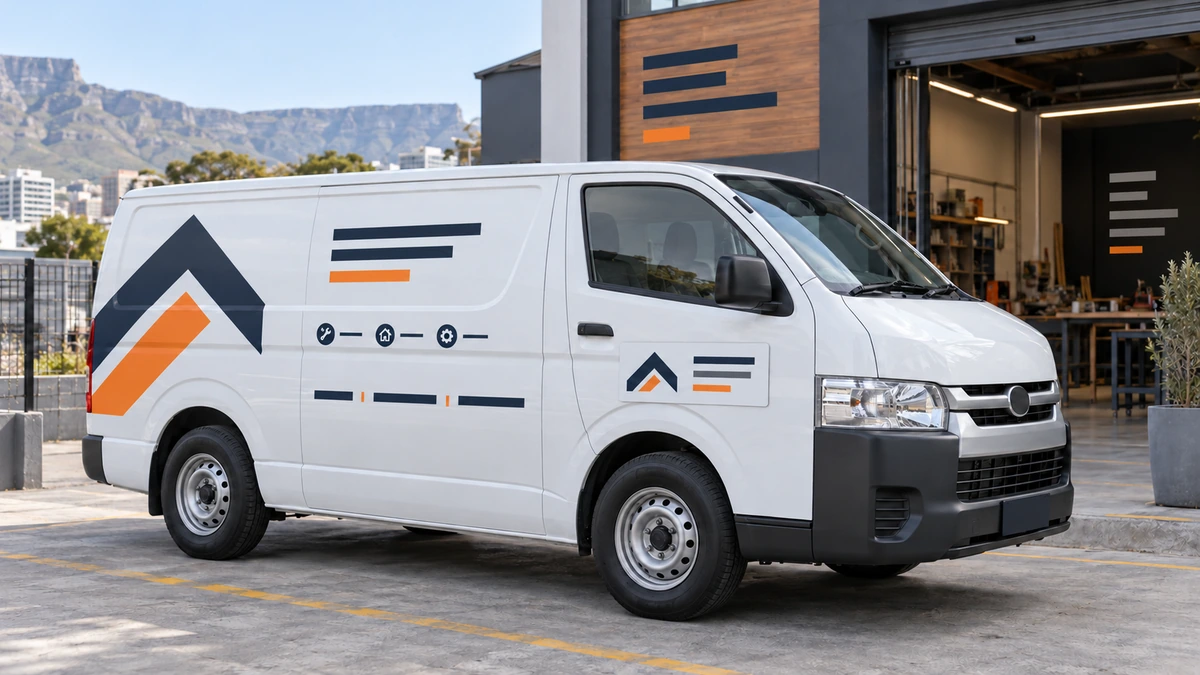
Vehicle branding turns travel time into repeated business visibility, but the design has only a few seconds to communicate. A clear logo, short service description and readable contact route will usually work harder than a vehicle covered in small text. Product choice matters too: a magnetic sign, cut lettering and a printed vinyl graphic are different solutions.
The correct approach depends on the vehicle surface, how permanent the branding should feel, the scale of the graphic and whether one vehicle or a fleet must look consistent. Ellesi’s current catalog supports magnetic vehicle signs and a wider Vinyl & Stickers range; it should not be assumed to promise a full vehicle-wrap service.
Compare magnetic signs, lettering and printed graphics
Magnetic vehicle signs
A magnetic sign is a separate printed panel that attaches to a suitable magnetically receptive steel surface. It can suit occasional promotions, contractors who use one vehicle for work and personal travel, or a business that needs branding for selected trips.
Ellesi’s live Car Magnets – Set of 2 product includes two matching full-colour signs on 0.8 mm magnetic sheet. Current sizes are 40 × 30 cm, 50 × 30 cm, 60 × 40 cm and 60 × 50 cm.
The panel must be flat, clean, dry and magnetically receptive. The product advises testing the position with a household magnet before ordering. Aluminium, fibreglass, plastic, heavily filled bodywork and strongly curved areas are not suitable. Magnets should not cross trim, creases or damaged paint.
Cut vinyl lettering
Cut lettering uses individually cut shapes rather than a printed rectangular background. It can create a clean result for a business name, website, telephone number or simple logo. Artwork usually needs suitable vector outlines, and the smallest letters or thin details must remain practical to cut and apply.
This format follows the vehicle colour, so contrast is essential. Dark lettering may disappear on tinted glass or dark paint, while very light lettering can lose definition on a white vehicle.
Printed vinyl graphics and larger decals
Printed vinyl can reproduce colour, gradients and more detailed graphics. It may be used for logos, promotional decals or larger branded areas when the exact material and application are confirmed. A larger graphic is not automatically a full wrap. Coverage, film type, lamination where applicable, panel shape and installation should all be defined in the quote.
Decide how temporary the branding needs to be
Temporary branding can make sense for an occasional promotion, a short campaign, a leased vehicle or a mixed personal-and-business use case. Magnetic signs are the clearest removable format in the current catalog because they can be lifted from a compatible panel.
That does not justify an absolute promise about paint safety or residue-free removal. Surface condition, cleanliness, application time, heat and the exact material all matter. Follow the product care instructions, remove and clean both the magnet and vehicle surface regularly, especially after rain or dust exposure, and inspect the panel before reapplication.
Vinyl adhesive behaviour varies by product. If later removal is important, state that requirement before material selection rather than treating every vehicle sticker as removable.
Design for a moving audience
A vehicle is often seen at road speed or from across a parking area. Build the layout around recognition, not a complete company profile. Start with the business name or logo, then one short description and one contact route.
Useful content may include:
- a clear logo or business name;
- a short service category;
- one telephone number;
- a concise website address; and
- a simple call to action where space allows.
Avoid long service lists, several social handles and multiple telephone numbers. Small copy placed low on a moving door will not be useful. If the brand needs many details, let the website carry them.
Check contrast against the vehicle colour and view the mock-up at a small scale. If the telephone number becomes difficult to read when the whole vehicle fits on a laptop screen, it is likely too small or too low in contrast.
Choose positions that suit the vehicle
Doors and broad side panels are common branding areas because they can offer a relatively uninterrupted view. Every vehicle still needs its own survey. Handles, fuel doors, panel gaps, trim, windows, sensors and strong curves affect the usable area.
Photograph the vehicle straight from the front, rear and both sides. Record the model and year, then measure each intended panel rather than estimating the total vehicle length. For a fleet, note differences between model variants; two vans with similar names may have different door seams or body shapes.
Keep legal plates, lights, windows and safety-critical features clear. Do not place a magnetic sign where curvature prevents complete contact. Larger vinyl graphics should be planned around panel breaks and applied by someone familiar with vehicle surfaces when appropriate.
Build a consistent fleet system
Fleet branding should be recognisable even when vehicles differ. Use the same logo proportions, colours, type hierarchy and contact format. Create a placement rule—such as logo on the front doors and service line on the rear side panel—then adapt it deliberately to each body style.
Number the approved artwork by vehicle and side. A file name should identify the model, registration or fleet number, view and version. This reduces the chance of installing a left-side layout on the wrong vehicle.
Photograph each completed application and keep those images as placement references for future vehicles. Consistency is created through repeatable specifications, not by stretching one file to fit every panel.
Prepare artwork and the vehicle
Supply vector logos where possible and high-resolution images at the intended output size. Outline or package fonts according to the production workflow. Proof all telephone numbers and URLs character by character.
Before installation, the vehicle should be clean and dry, with wax, polish, dust and residue removed using methods suitable for the finish. Fresh repairs, damaged paint and non-standard coatings should be disclosed before material selection. Magnetic panels require regular cleaning on both contact surfaces.
For anything beyond the configured magnet product, send photographs, dimensions, required coverage, quantity and expected use when you request vehicle branding. This allows Ellesi to confirm which product or service is actually available.
Frequently asked questions
Does Ellesi offer full vehicle wraps?
This guide does not make that claim. The live catalog clearly lists Car Magnets and vinyl products. Ask for a custom assessment if you need larger vehicle graphics or extensive coverage.
Will a magnet attach to every car?
No. The intended panel must be flat and magnetically receptive. Test it before ordering; aluminium, plastic, fibreglass, heavily filled and strongly curved areas are unsuitable.
How long will vehicle graphics last?
No universal lifespan is promised here. Material, application, exposure, cleaning and surface condition affect performance. Confirm the specification for the exact job.
Make the vehicle recognisable without making it crowded. Get a custom vehicle-branding quote, or contact Ellesi with vehicle photographs and measurements.